Design Thinking for Kids: Teaching Creativity with Purpose
2025-11-21
Design Thinking for Kids: Teaching Creativity with Purpose
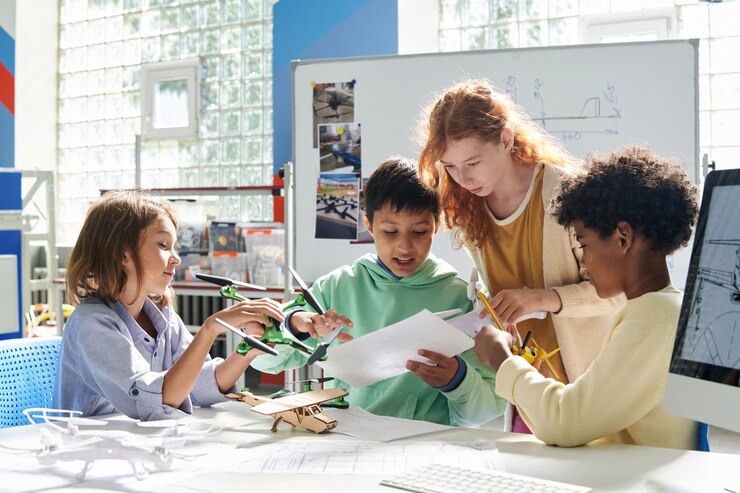
Beyond Play: Why Design Thinking Matters for Kids
Imagine a child staring at a messy playroom. Most of the time, they see a chore. But give that same child a framework for problem-solving, and suddenly, they see a challenge waiting for a solution. They might ask, "Why is it hard to put toys away?" or "What kind of machine could scoop these up for me?"
This shift—from passive observer to active problem solver—is the power of Design Thinking.
While often associated with startups and product designers, design thinking is an incredible tool for kids. It moves STEM education beyond just “building cool stuff” and anchors it in purpose. It teaches children that the best inventions aren’t just complex—they are helpful.
The Design Thinking Mindset: Structured Creativity
At its core, design thinking is a human-centered approach to innovation. For kids, it’s a roadmap from a blank page to a tangible solution. It breaks down “being creative” into manageable, exciting steps.
Empathy: Understanding the "Who" and "Why"
Great design starts with the heart, not the hands. Before touching a LEGO brick or code, children must understand who they are designing for.
- The Lesson: Kids ask questions. Designing a video game controller? They interview friends: “Do your thumbs get tired? Is the button too far away?”
- The Outcome: Engineering skills serve others, transforming projects from selfish endeavors into acts of service.
Ideation: The Power of "What If?"
Once the problem is clear, it’s time to brainstorm. No idea is a bad idea.
- The Lesson: Encourage wild, wacky, and “impossible” ideas. Use divergent thinking to generate many solutions before selecting the best one.
- The Outcome: Kids remove the fear of being wrong, boosting creativity.
Prototyping: Thinking with Your Hands
Prototyping is the messy, fun part. It’s about testing ideas, not building a perfect final product.
- The Lesson: Use cardboard, tape, pipe cleaners, or scratch code. Build, test, and watch it break.
- The Outcome: Failure becomes data, guiding improvements for the next iteration.
Building Critical and Creative Skills
Design thinking develops more than just better STEM projects—it shapes character.
- Resilience: When a prototype fails, the cycle gives kids a clear next step: iterate.
- Collaboration: Design is rarely solo. Students learn to listen, share, and build on ideas together.
- Critical Observation: Kids start noticing inefficiencies and opportunities, training their problem-solving muscles.
Tip for Parents: When your child encounters a small problem (like a sliding rug), ask: "If you were an inventor, how would you redesign this?"
The Clubhouse Engineers Approach
At Clubhouse Engineers, technology is a tool, empathy is the compass. Students don’t just follow instructions—they tackle open-ended challenges.
- Mentorship, Not Lectures: Instructors guide the “Empathize, Define, Ideate, Prototype, Test” cycle.
- Discovery-Based Learning: A student might build a vehicle to protect an egg from a 3-foot drop. They receive materials and methodology but figure out solutions themselves.
This approach ensures that when a project is complete, kids haven’t just followed a recipe—they’ve truly engineered a solution.
The Power of Real-World Problem Solving
Design thinking skills extend beyond the classroom. Our students have:
- Reorganized study spaces for efficiency
- Built feeders for pets solving specific problems
- Created apps or games helping siblings learn math
When kids realize their brains can solve real-world challenges, their confidence and curiosity soar.
Start Designing Today
Creativity isn’t inspiration—it’s a muscle. Teaching design thinking gives children the tools to tackle any challenge with empathy, creativity, and confidence.
Let’s raise a generation who don’t just see problems—they design solutions.
Clubhouse Engineers: Empowering Young Innovators
We are a STEM enrichment center in the Greater Toronto Area for curious minds aged 9 to 17. Our hands-on programs in robotics, coding, and electronics are designed to spark creativity, encourage teamwork, and build lasting confidence.
Ready to spark your child’s creativity? Explore our programs at https://clubhouse.engineer