Why Hands-On STEM Beats Worksheets Every Time
2025-11-25
Why Hands-On STEM Beats Worksheets Every Time
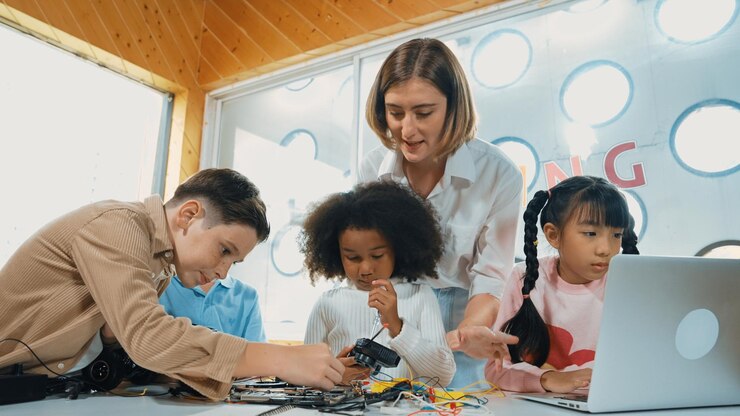
When Learning Turns Into Discovery
Have you ever watched a child light up the moment they build something that actually works? That spark almost never comes from a worksheet. It comes from experimenting, tinkering, and discovering ideas through action. Hands-on STEM turns learning from something kids complete into something they experience, and the difference is huge.
Why Hands-On STEM Changes Everything
Kids remember what they do far more than what they simply read or write. When they build circuits, test structures, or program simple robots, they develop real-world problem-solving skills that worksheets alone can’t teach.
Hands-on learning builds curiosity, confidence, and resilience, three essential skills for the future. It also helps children internalize STEM concepts in a deeper, more meaningful way because every discovery is tied to a real physical experience.
The Big Benefits of Hands-On STEM
1. Learning Comes Alive Through Action
Hands-on STEM engages multiple senses, which strengthens memory and comprehension. Kids don’t just read about cause and effect, they see a bulb light up, a motor spin, or a structure collapse and improve it.
This real-time feedback helps concepts “click” and encourages experimentation.
2. Mistakes Become Momentum (Not Setbacks)
Worksheets often focus on getting the “right” answer. Hands-on STEM celebrates iteration. When a bridge breaks or a circuit doesn’t work, kids learn that failure is simply data for the next test.
This builds resilience and teaches them to ask, “What should I try next?”
3. Problem-Solving Feels Like Play
Hands-on projects put kids in the role of engineers and inventors. They troubleshoot, redesign, test solutions, and see immediate results.
Whether they’re building a mini-vehicle or coding a simple game, they gain confidence by solving challenges with their own ideas.
4. Teamwork Happens Naturally
STEM projects encourage kids to share ideas, divide tasks, and communicate clearly. Worksheets are often solitary, but building something together fosters teamwork and helps kids appreciate different perspectives, as real engineering teams do.
Try These Hands-On STEM Ideas at Home or School
Here are simple ways parents and teachers can turn STEM into an exciting, experience-driven activity:
-
Start with materials before introducing concepts.
Let kids explore objects like motors, magnets, or craft materials before explaining the science behind them. -
Build a small “maker space.”
A bin with straws, tape, cardboard, string, popsicle sticks, and LEDs is enough to inspire dozens of projects. -
Use the “design → test → improve” loop.
Encourage kids to build quickly, test early, and iterate rather than aiming for perfection. -
Ask curiosity-first questions.
Instead of giving answers, try:
“What do you think will happen?”
“How could this be stronger?” -
Give them quick wins to boost confidence.
Lighting an LED, coding a tiny animation, or building a simple bridge gives kids momentum to try bigger challenges.
Let Curiosity Take the Lead
Teaching kids to ask better questions equips them with the ultimate STEM tool: the ability to investigate, innovate, and think independently. By nurturing curiosity, you turn every challenge into an opportunity for learning, every mistake into insight, and every question into a stepping stone toward creativity.
Let learning be an adventure filled with inquiry, experimentation, and “aha!” moments.
Clubhouse Engineers: Empowering Young Innovators
We are a STEM enrichment center in the Greater Toronto Area for curious minds aged 9 to 17. Our hands-on programs in robotics, coding, and electronics are designed to spark creativity, encourage teamwork, and build lasting confidence.
Ready to bring fun, hands-on STEM to your students?
Explore our programs at https://clubhouse.engineer