How Real-World Problems Make STEM Learning Unstoppable
2025-12-05
How Real-World Problems Make STEM Learning Unstoppable
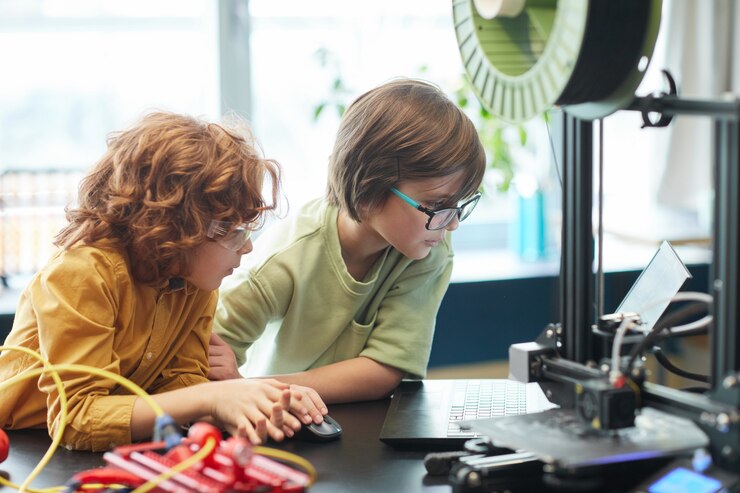
Turn Challenges into Curiosity
Remember trying to understand fractions by dividing pizzas on a worksheet? Now imagine your child tasked with designing the most efficient delivery route for a local pizza shop, calculating fuel consumption and delivery times. The second scenario sparks far more interest. When STEM concepts connect to real-world problems, children don’t just learn, they become passionate innovators, driven to make a tangible impact.
Why Real-World STEM Ignites Learning
Authentic problems transform education from abstract theory into powerful tools. Kids develop essential skills like problem-solving, creativity, and critical thinking. They’re not memorizing facts, they’re applying knowledge to overcome real challenges, fostering deep, meaningful understanding and empowering them to influence the world around them.
Real Problems Spark Motivation
When kids design a device to clean plastic from a local park or build a robot to sort recyclables, the stakes feel real. Authentic challenges naturally drive exploration, experimentation, and iteration. Learning becomes purpose-driven, and every success, or failure, carries meaning beyond the classroom.
Learning by Doing Builds Skills
Problem-based learning puts children in the driver’s seat. They identify problems, brainstorm solutions, prototype, test, and refine. Whether coding a tool-sharing app, designing a sustainable shelter, or building a mini water filtration system, students engage in the full engineering cycle. This hands-on process builds confidence, independence, and practical STEM skills.
Collaboration Mirrors the Real World
Most real-world problems aren’t solved alone. Projects like designing a safer playground or creating energy-efficient buildings teach kids to communicate ideas, negotiate differences, share responsibilities, and integrate diverse perspectives. These collaborative experiences mirror professional STEM environments, preparing children for future team-based problem-solving.
Iteration Teaches Resilience
Solutions rarely work perfectly on the first try. Prototyping, testing, and revising teach resilience and adaptability. Every “failure” becomes an opportunity to analyze, reflect, and improve. This cycle of iteration deepens critical thinking and strengthens understanding.
Practical Takeaways for Parents and Educators
- Identify Local Challenges: Encourage kids to explore real community problems like litter, traffic, or energy waste, then brainstorm STEM solutions.
- Use Open-Ended Tasks: Pose a problem without a single solution. Example: “How can we make our classroom more energy-efficient?”
- Connect to Interests: Tie projects to hobbies, gamers can design a physics-based level, nature lovers can build innovative bird feeders.
- Frame “Failure” as Learning: Ask, “What did we learn from this? What should we try next?” Focus on the process, not just the outcome.
- Include Expert Input: Small guidance from local professionals can make the challenge feel more authentic, whether a gardener, mechanic, or engineer.
Let Real-World Challenges Lead the Way
Real-world problems are the ultimate spark for STEM engagement. They turn abstract concepts into meaningful, hands-on experiences, cultivating curiosity, creativity, and resilience. By empowering kids to solve challenges they encounter in their world, we nurture the next generation of innovators and problem-solvers.
Clubhouse Engineers: Empowering Young Innovators
We are a STEM enrichment center in the Greater Toronto Area for curious minds aged 9 to 17. Our hands-on programs in robotics, coding, and electronics are designed to spark creativity, encourage teamwork, and build lasting confidence.
Ready to bring fun, hands-on STEM to your students?
Explore our programs at https://clubhouse.engineer