When Should Kids Start STEM Education?
2025-11-03
When Should Kids Start STEM Education?
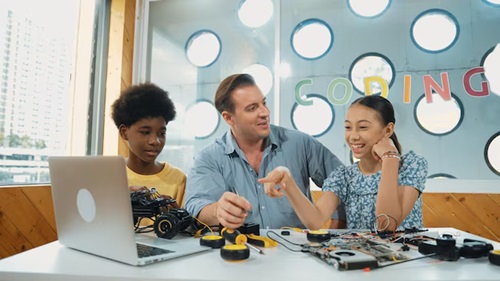
It is natural for parents to wonder about the best time to introduce their children to STEM. While curiosity sparks early, effective structured STEM learning truly flourishes when kids are ready for deeper engagement. This usually happens when they can reason, collaborate, and tackle multi-step projects.
At Clubhouse Engineers, our programs are designed for curious minds aged 9 to 17. We believe this late childhood and early teenage window is ideal. It is when students are best equipped to build creativity, confidence, and teamwork through hands-on robotics, coding, and electronics.
Early Curiosity vs. Structured Learning
Young children naturally explore the world with scientific curiosity. They ask endless questions and experiment with how things work. This early exploration is vital for development. However, formal STEM education, especially in areas like coding and robotics, requires a different set of skills.
It needs the ability to follow complex instructions, understand abstract concepts, and work patiently through challenges. These cognitive abilities typically develop as children mature.
The Ideal Window: Ages 9-17
By late childhood, around age 9, most kids have developed stronger logical reasoning and problem-solving skills. They are also more capable of sustained focus and working effectively in teams. This makes them ready for the kind of project-based learning that truly builds engineering mindsets.
At this age, students can fully engage with the iterative process of design, build, test, and refine. They can understand why a circuit needs specific components or how lines of code control a robot's movements. This deeper understanding fosters genuine learning, not just rote memorization.
Building Key Skills Through Hands-On Projects
Our programs focus on hands-on activities that leverage these developing skills. Whether it is programming a robot to navigate a maze or designing an electronic gadget, students learn by doing. This approach helps them:
- Develop Critical Thinking: They troubleshoot problems and find solutions independently.
- Boost Creativity: They design unique projects and experiment with different approaches.
- Enhance Collaboration: They work with peers, sharing ideas and combining strengths.
- Build Confidence: They see their ideas come to life and gain a sense of accomplishment.
These are not just technical skills. They are life skills that prepare them for any future path.
Why This Age Group Thrives
Kids aged 9-17 are often eager to understand the world around them and make an impact. They are ready to move beyond simple games and into projects with real-world applications. This readiness, combined with their growing cognitive abilities, creates a powerful learning environment.
We provide the tools and guidance, but the students drive their own learning and innovation. This empowers them to become confident problem-solvers and future innovators.
Clubhouse Engineers: Empowering Young Innovators
We are a STEM enrichment center in the Greater Toronto Area for curious minds aged 9 to 17. Our hands-on programs in robotics, coding, and electronics are designed to spark creativity, encourage teamwork, and build lasting confidence.